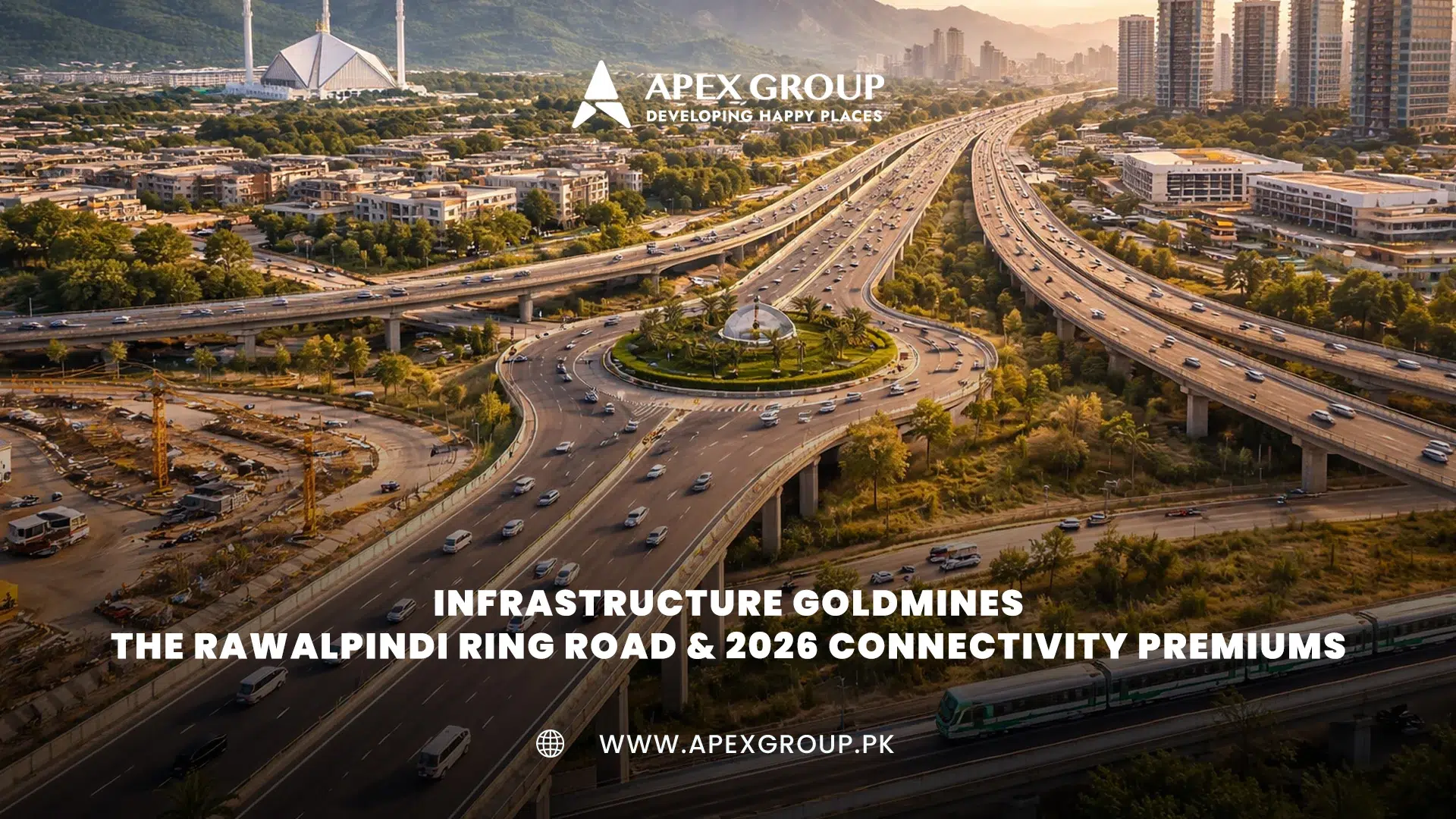
Infrastructure Goldmines: The Rawalpindi Ring Road & 2026 Connectivity Premiums
They say that in real estate, you don’t wait to buy land; you buy land and wait. But in 2026, the “waiting” part is happening in the fast lane. If you’ve driven near the outskirts of Rawalpindi recently, you’ve seen the massive machinery, the rising interchanges, and the miles of fresh asphalt cutting through what used to be quiet farmland. This isn’t just a new road—it is a 38-kilometer economic engine that is fundamentally shifting the gravity of the Twin Cities.
The Rawalpindi Ring Road (RRR) is currently the single most important piece of infrastructure in Northern Pakistan. As Phase 1 (from Baanth to Thalian) nears its final stages of completion this April, we are witnessing the birth of a “Connectivity Premium”—a sudden, sharp spike in value that occurs when a location moves from being “isolated” to becoming a “hub.”
For the savvy investor, this isn’t just a highway; it’s a roadmap to wealth. Here is why the Ring Road is the goldmine of 2026.
- The Law of the “Connectivity Premium”
Real estate value has always been tied to time. In the past, a plot’s value was determined by its distance in kilometers from the city center. In 2026, distance is irrelevant; commute time is everything. Before the Ring Road, traveling from the G.T. Road to the New Islamabad International Airport was a grueling trek through the congested heart of Rawalpindi. Now, that hour-long struggle is being replaced by a 15-minute breeze. When you slash travel time by 70%, the land at the end of that road doesn’t just increase in value—it enters a different asset class. This is the “Connectivity Premium” in action.
- Mapping the Interchanges: Where to Put Your Money
The biggest mistake investors make is buying “near” the road. The real profit is concentrated at the Interchanges. These are the access points where commercial activity, logistics, and high-end residential demand will peak.
The Baanth Interchange: The Industrial Anchor
Located where the Ring Road meets the N-5 G.T. Road, Baanth is becoming the logistics capital of the region. As trade routes stabilize following the 2026 ceasefire, the demand for warehouses, distribution centers, and heavy-machinery yards here is skyrocketing.
- The Play: Look for commercial land suited for storage and logistics.
Adyala Road Interchange: The New Residential Heart
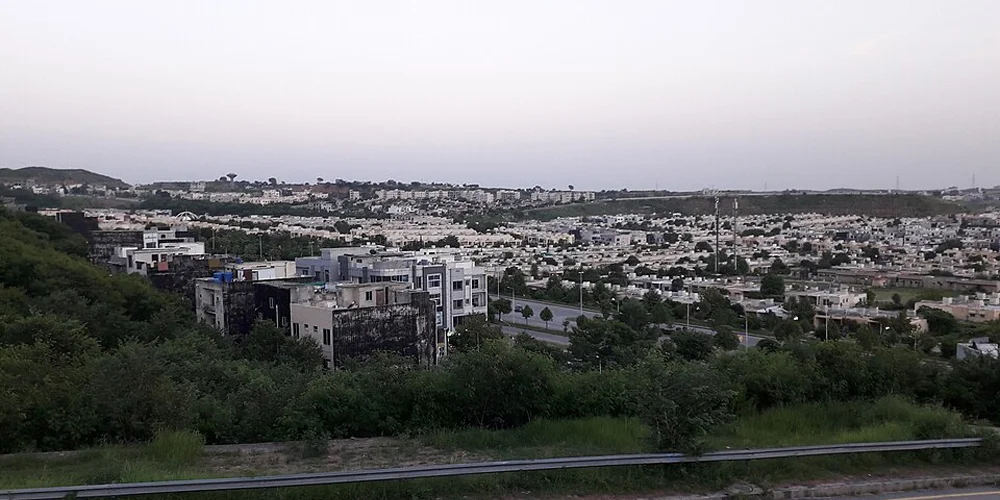
Adyala Road was historically a bottleneck, but the Ring Road has turned it into a prime suburb. It is now the preferred choice for families who want to escape the noise of the city but need to reach Islamabad for work.
- The Play: 5-marla and 10-marla residential plots in established gated communities are seeing the highest “buy-in” rate from local buyers.
The Thalian Interchange: The CPEC Connection
Thalian is the strategic handshake between the Ring Road, the M-2 Motorway, and the CPEC route. This is arguably the most valuable “Goldmine” on the map. It serves as the gateway to the airport and the motorway network.
- The Play: High-end corporate offices and short-term rental apartments for frequent travelers and airport staff.
- The “Relief Valve” Effect: De-congesting the Core
The Ring Road is doing for Rawalpindi what the M-2 did for Lahore: it’s creating a new city outside the old one. By diverting heavy traffic and trucks away from Saddar and Raja Bazaar, the RRR is making the city core more livable, but it’s making the “Ring Road Belt” the new elite destination.
In 2026, we are seeing a mass migration of capital. Modern schools, private hospitals, and shopping malls are already securing land along the RRR. They aren’t building for today; they are building for the next twenty years.
- Timing the 2026 Market: The Sweet Spot
Every infrastructure project has a “Goldilocks Zone” for investment.
- Stage 1 (Planning): High risk, lowest price.
- Stage 2 (Construction): Moderate risk, rising price.
- Stage 3 (Completion): Low risk, peak price.
As of April 2026, we are in the final stretch of Stage 2. The road is no longer a promise; it is a physical reality you can see and touch. The “risk” of the project being canceled is gone, but the “Completion Premium”—the final price jump that happens when the road officially opens to traffic—hasn’t fully kicked in yet. This is the sweet spot. You are buying in with total certainty, but before the “masses” arrive and drive prices to their peak.
- Beyond Plots: The Rise of Commercial & Industrial Assets
While most people focus on residential plots, the real 2026 “Goldmine” lies in commercial utility.
- Corporate Hubs: Companies are looking for “Satellite Offices” along the Ring Road to avoid the traffic of Islamabad’s Blue Area while staying 10 minutes away from the airport.
- Service Areas: Fuel stations, fast-food courts, and rest areas along the interchanges are currently generating the highest long-term lease interest.
Conclusion: A Once-in-a-Generation Shift
The Rawalpindi Ring Road isn’t just a project for the Twin Cities; it is a catalyst for the entire Punjab region. It changes how goods are moved, how people live, and how wealth is generated.
In April 2026, the dust is settling on the construction sites, but the momentum is just beginning. The path to profit is paved in asphalt. For those who can see the map clearly, the RRR belt isn’t just a place to drive—it’s a place to build a legacy. The connectivity is coming. The only question is: will you be an owner or a passenger when it arrives?

Discover a plethora of investment opportunities and luxuriant real estate ventures with Apex Group. Our trusted team of professionals is determined to deliver the finest services in an effort to remodel the property landscape of Pakistan.
Quick Links
Join us
Get updates on special events