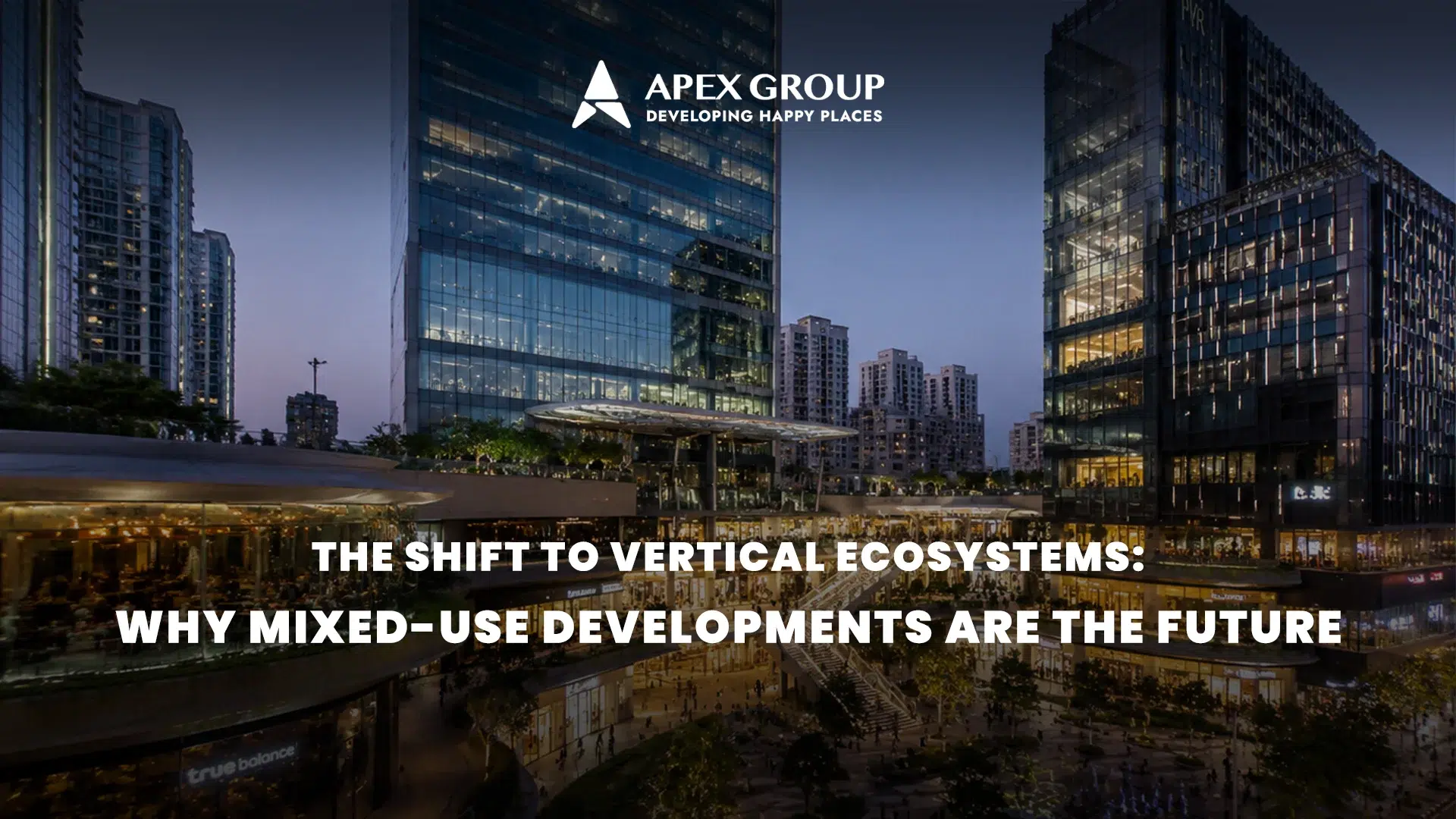
The Shift to Vertical Ecosystems: Why Mixed-Use Developments are the Future
For years, the traditional approach to urban development in Pakistan was that of expansion into a horizontal ecosystem. New housing and commercial developments expanded outwards, leading to the creation of large suburbs that were segregated from the commercial areas within cities’ downtown cores. Unfortunately, with the growth of our populations and denser centers of population in city cores, we have reached a point where such models can no longer support further development.
At Apex Group, we envision real estate not only in terms of concrete and steel but as a holistic ecosystem that caters to community, lifestyle, and business interests. In this post, we discuss why the vertical ecosystem is the future and how this change is shaping the landscape of the property sector in Pakistan.
- Beyond the Single-Use Skyline: What is a Vertical Ecosystem?
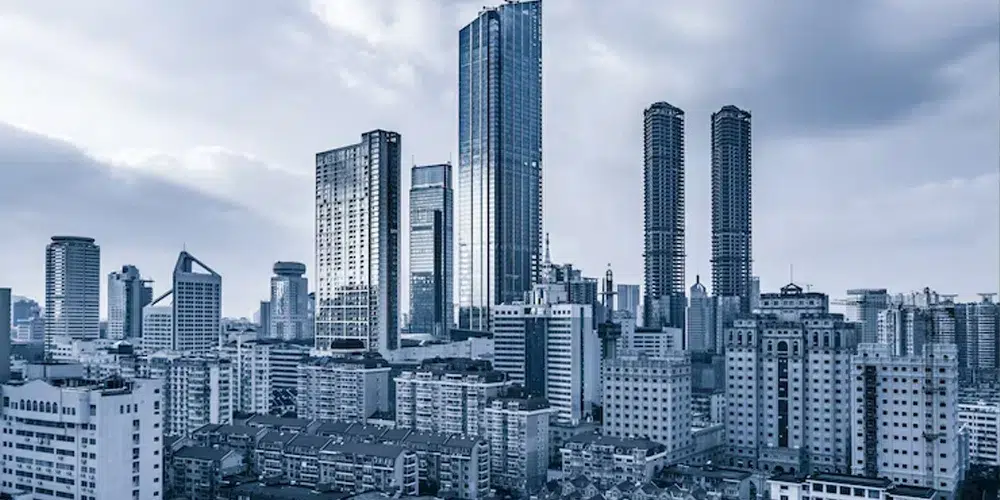
Vertical ecosystem—or simply “vertical city”—is characterized by the combination of living, working, shopping, wellbeing, and leisure elements in one compact and tall structure.
Contrary to a regular skyscraper, which can either have flats or office spaces, a vertical ecosystem operates as a separate community where a person can ride a lift from his or her apartment to work in a coworking space; purchase goods in a local store, or eat lunch in an open-air restaurant located at the rooftop level.
This model represents a fundamental evolution in real estate design:
- Convenience: Essential services and amenities are accessible within minutes.
- Efficiency: Infrastructure like security, parking, and utility management is centralized.
- Community: Shared spaces encourage social and professional interaction.
- The Core Drivers of Vertical Urbanism
The rapid acceleration toward vertical ecosystems is driven by several economic, social, and environmental factors in modern metropolises:
- The Rising Cost of Urban Sprawl
Expansion on a horizontal basis has become too expensive for urban centers and towns. Each time a town expands horizontally, there is need to construct additional roads, sewerages, water, and extensive electricity connections. On the other hand, vertical development allows more occupants and companies to operate within a small piece of land.
- Changing Consumer Lifestyles
Contemporary professionals and younger generation families prefer to prioritize time rather than enduring hours of travel. “The 15-Minute City” concept has been formulated around the premise that daily necessities must be located nearby, either through walking distance or short elevators. Mixed-use developments cater to this preference by putting everything necessary for living just outside the front door.
- The Rise of Hybrid Work
The integration of digital technology and remote work has blurred the line between the office and the home. Professionals need high-speed connectivity, co-working lounges, and quiet spaces near their living quarters. Mixed-use properties provide dynamic environments that serve changing work models.
- Why Investors Prefer Mixed-Use Environments
For real estate investors, the shift away from single-use properties toward integrated platforms is a risk-mitigation and value-creation strategy.
- Diversified Revenue Streams: Commercial spaces and retail outlets benefit from the built-in foot traffic generated by the residents above. This creates a captive market that makes the development resilient during economic fluctuations.
- Higher Rental Yields: Studies show that tenants are willing to pay a “diversity premium” to live in properties where amenities are close at hand. This results in higher and more stable occupancy rates for property owners.
- Long-Term Asset Stability: Because vertical developments consolidate community functions, the underlying asset is more insulated from changes in a single sector.
- Sustainability and Resource Efficiency
Energy conservation and carbon footprint reduction are central concerns for forward-thinking developers. In 2026, sustainable design is no longer an optional luxury—it is an industry necessity.
Vertical ecosystems are inherently more resource-efficient than traditional layouts:
- Energy Optimization: Shared utility systems, high-efficiency heating and cooling, and modern insulation reduce the overall energy requirement of the structure.
- Reduced Transportation Emissions: By placing work, leisure, and residence in the same complex, the reliance on automobiles decreases, reducing traffic congestion and air pollution.
- Green Integration: Vertical developments often incorporate vertical gardens, solar panels, and water management systems that create a healthy, self-sustaining microclimate.
- Integrating the Vision: The Apex Ecosystem
Creating a successful vertical ecosystem requires more than just building high; it requires a comprehensive, integrated approach from design to daily management. At Apex Properties, we have expanded our professional expertise to support every stage of the property life cycle:
- Apex Construction & Developer: Building high-quality, safe, and modern mixed-use towers using advanced construction techniques.
- Apex Realtors: Connecting buyers and tenants with developments that offer long-term financial stability and high yields.
- Apex Media & Marketing: Ensuring that transparency, intelligence, and digital communication are brought to every project.
Conclusion
The emergence of vertical ecosystems is inevitable, and it is a necessary phase in designing modern cities. It is a natural progression that occurs due to the problems faced by sprawling cities as well as changes in lifestyles, among others. The incorporation of everything that an individual need within one single ecosystem ensures the creation of value for everyone involved.
At Apex Group, we are proud to be at the forefront of this transformation, building modern, trusted, and people-oriented developments that look toward the future.
Discover a plethora of investment opportunities and luxuriant real estate ventures with Apex Group. Our trusted team of professionals is determined to deliver the finest services in an effort to remodel the property landscape of Pakistan.
Quick Links
Join us
Get updates on special events